I served my kale salad at a party last weekend and created quite a stir! My friends have been making the salad and sharing it with their friends.
I couldn't be happier!
Everyone should eat more kale. It's delicious and good for you!
I eat kale with freshly squeezed lemon juice, olive oil (I have a chipotle-infused oil that I love), freshly grated Parmesan cheese, and cracked black pepper almost daily. Tonight, I tossed the kale salad with some leftover, cold, whole-wheat pasta for an easy variation on the theme that feels like more of a complete meal.
The possibilities for kale salads are endless!
Adventures in fresh, local, seasonal, sustainable produce and a plant-based, whole-foods diet.
Showing posts with label kale. Show all posts
Sunday, April 22, 2012
Thursday, April 19, 2012
Garlic Scape Pesto
I'm learning that making a fresh pesto is as easy as blending up whatever greens and garlic you may have on hand with some lemon, nuts, olive oil, and water. No special measurements needed.
For this pesto, I used some lovely garlic scapes from my CSA in place of mature garlic. [Garlic scapes, I learned, are the "thinnings" from the garden. To grow garlic (or anything else, really) you plant a bunch of seeds, and then pick some of the shoots to thin them out as they grow.]
For the greens, I used kale and beet greens. My bullet-style blender is small, so I blended the greens and garlic with the lemon, oil, and water, and put the results in a bowl. Then I blended the walnuts with some oil and water and mixed the result into the same bowl. It made for an artsy and unusual pesto presentation that tasted just the same as regular pesto when spooned over whole-wheat pasta.
For this pesto, I used some lovely garlic scapes from my CSA in place of mature garlic. [Garlic scapes, I learned, are the "thinnings" from the garden. To grow garlic (or anything else, really) you plant a bunch of seeds, and then pick some of the shoots to thin them out as they grow.]
For the greens, I used kale and beet greens. My bullet-style blender is small, so I blended the greens and garlic with the lemon, oil, and water, and put the results in a bowl. Then I blended the walnuts with some oil and water and mixed the result into the same bowl. It made for an artsy and unusual pesto presentation that tasted just the same as regular pesto when spooned over whole-wheat pasta.
Wednesday, March 28, 2012
Beet and Feta Salad
The Cheesecake Factory has a lovely “Beets with Goat Cheese” salad that, in addition to beets and goat cheese, includes apples, arugula, and pecans. That salad -- which I have had on many occasions -- was the inspiration for this dish.
I cooked the three beets I received from my CSA by placing them in a baking dish with about 1 inch of water, covering the dish with tin foil, and then putting it in the oven at 400 degrees for one hour. After removing the beets from the oven and letting them cool, the peels slipped right off and the beets were ready to dice into a salad. I used only one beet for this recipe, and put the other two in the ‘fridge for another use.
1 beet, cooked, peel removed, diced
Greens from one beet, removed from stem and chopped
3 large leaves of kale, removed from stem and chopped
3 leaves of romaine, chopped
1 green apple, diced
1 small handful of raw almonds
1/4 cup crumbled feta cheese
olive oil, balsamic vinegar, cracked black pepper, to taste
Arrange everything on a plate. Drizzle with olive oil, balasmic vinegar, and cracked black pepper. Enjoy!
Labels:
almonds,
apple,
beet greens,
beets,
kale,
romaine lettuce
Sunday, March 25, 2012
Kale, Asparagus, and Feta Frittata
It was coming to the end of my CSA week, and I still had a fair amount of kale and asparagus left. So, I searched the web for kale and asparagus recipes and came up with an idea for a frittata. I was super-excited (Frittata!?! Why didn't I think of that?!?), especially because my dad makes amazing frittatas and I love them.
A frittata is sort of in between an omelet and a quiche. And my version, as usual, omits the egg yolks.
1/2 onion, chopped
1 cup kale, chopped
1/2 cup asparagus, chopped
1 teaspoon olive oil
10 egg whites
1/4 cup feta cheese
Turn on the broiler so the oven has a chance to heat.
Put the olive oil into a pan on the stovetop THAT CAN LATER GO INTO THE OVEN.
Heat the olive oil over medium-high heat and then add the onion.
After a few minutes, add the kale, so it can wilt.
When the kale is wilted and the onions are starting to brown, add the asparagus, eggs, and feta. Give it all a quick stir at the start so that the ingredients are evenly distributed, but then DON'T TOUCH IT AGAIN. You want the eggs to set, not scramble.
When the eggs are starting to set along the edges of the pan (the eggs should be about 2/3 cooked, but still runny on top), remove the pan from the stove top and put it in the oven under the broiler. Watch it carefully from here. You want the frittata to puff and brown, but not burn. You can check to see if the eggs are set by wiggling the pan (if it still wiggles, they're not set). When you think the eggs are fully set (no wiggle!), put a knife through the frittata to make sure it comes out clean. If it does, you'll know the frittata is set all the way through.
Remove the pan from the oven and allow it to cool for about ten minutes. Then, run a knife around the edges to loosen the frittata and then, carefully, using the knife and a spatula, remove it from the pan and onto a plate.
You can slice it up like a pizza for serving. It's protein and vitamin packed, and excellent with a side of green salad!
A frittata is sort of in between an omelet and a quiche. And my version, as usual, omits the egg yolks.
1/2 onion, chopped
1 cup kale, chopped
1/2 cup asparagus, chopped
1 teaspoon olive oil
10 egg whites
1/4 cup feta cheese
Turn on the broiler so the oven has a chance to heat.
Put the olive oil into a pan on the stovetop THAT CAN LATER GO INTO THE OVEN.
Heat the olive oil over medium-high heat and then add the onion.
After a few minutes, add the kale, so it can wilt.
When the kale is wilted and the onions are starting to brown, add the asparagus, eggs, and feta. Give it all a quick stir at the start so that the ingredients are evenly distributed, but then DON'T TOUCH IT AGAIN. You want the eggs to set, not scramble.
When the eggs are starting to set along the edges of the pan (the eggs should be about 2/3 cooked, but still runny on top), remove the pan from the stove top and put it in the oven under the broiler. Watch it carefully from here. You want the frittata to puff and brown, but not burn. You can check to see if the eggs are set by wiggling the pan (if it still wiggles, they're not set). When you think the eggs are fully set (no wiggle!), put a knife through the frittata to make sure it comes out clean. If it does, you'll know the frittata is set all the way through.
Remove the pan from the oven and allow it to cool for about ten minutes. Then, run a knife around the edges to loosen the frittata and then, carefully, using the knife and a spatula, remove it from the pan and onto a plate.
You can slice it up like a pizza for serving. It's protein and vitamin packed, and excellent with a side of green salad!
Friday, March 23, 2012
Shrek Shake
How much kale did your kids eat today?
Mine ate this much -- about 2 cups.
I took this glass of kale, filled it halfway up with skim milk, and blended it. When the greens and milk were completely smooth, I added about half a cup of frozen raspberries and the sections of one clementine, and then blended it all again. The result was a light green, Shrek-colored shake that was a cool, sweet, vitamin-filled treat that both of my kids could LOVE.
They have both filled up on "Shrek shakes" before / during dinner for the last several nights in a row...and I couldn't be happier.
Mine ate this much -- about 2 cups.
I took this glass of kale, filled it halfway up with skim milk, and blended it. When the greens and milk were completely smooth, I added about half a cup of frozen raspberries and the sections of one clementine, and then blended it all again. The result was a light green, Shrek-colored shake that was a cool, sweet, vitamin-filled treat that both of my kids could LOVE.
They have both filled up on "Shrek shakes" before / during dinner for the last several nights in a row...and I couldn't be happier.
Tuesday, March 20, 2012
Vegetable Broth
When I first considered joining a CSA, my biggest fear was wasting too much food.
I wasn't sure I would know what to do with half of the "weird" veggies I received. I was concerned that the volume of vegetables would be more than I could eat. I was afraid I wouldn't commit to chopping, cooking, and otherwise preparing the food I received. I simply didn't know how I would handle all of that perishable produce, and was concerned that it would all rot in the bottom of my 'fridge.
I did a lot of research before I joined my CSA on this very question. And my research all led me to one place.
Broth.
If you don't know what the heck to do with carrot greens, make broth.
If last week's veggies are still kicking around when you get this week's delivery, make broth.
It's a CSA coping mechanism, and it's a good one.
As it turns out, though, I used most of my veggies in the first week. [Success!]
But I did have plenty of scraps (carrot greens, kale stems, cabbage hearts, etc.) that I collected in a tupperware container in the 'fridge over the course of the week. I threw them all in a stock pot on Sunday evening, filled it with water, brought it to a boil, and then allowed it to simmer on low for 3 hours.
What emerged was a rich, dark broth that is fat-free and salt-free, but nonetheless flavorful and perfect for making soup or cooking grains.
I strained it into a metal bowl and allowed it to cool overnight in the 'fridge before moving it to tupperware containers. I put half in the 'fridge for a soup I have in mind, and froze the other half for later use.
I really love making broth from scraps like this. It must be good karma not to waste a single scrap of plant food, right?
I wasn't sure I would know what to do with half of the "weird" veggies I received. I was concerned that the volume of vegetables would be more than I could eat. I was afraid I wouldn't commit to chopping, cooking, and otherwise preparing the food I received. I simply didn't know how I would handle all of that perishable produce, and was concerned that it would all rot in the bottom of my 'fridge.
I did a lot of research before I joined my CSA on this very question. And my research all led me to one place.
Broth.
If you don't know what the heck to do with carrot greens, make broth.
If last week's veggies are still kicking around when you get this week's delivery, make broth.
It's a CSA coping mechanism, and it's a good one.
As it turns out, though, I used most of my veggies in the first week. [Success!]
But I did have plenty of scraps (carrot greens, kale stems, cabbage hearts, etc.) that I collected in a tupperware container in the 'fridge over the course of the week. I threw them all in a stock pot on Sunday evening, filled it with water, brought it to a boil, and then allowed it to simmer on low for 3 hours.
What emerged was a rich, dark broth that is fat-free and salt-free, but nonetheless flavorful and perfect for making soup or cooking grains.
I strained it into a metal bowl and allowed it to cool overnight in the 'fridge before moving it to tupperware containers. I put half in the 'fridge for a soup I have in mind, and froze the other half for later use.
I really love making broth from scraps like this. It must be good karma not to waste a single scrap of plant food, right?
Pork Chops with Braised Vegetables
My grandmother's pork chops are the most moist and delicious pork chops anyone has ever made. My grandmother doesn't do much cooking these days, but she shared her recipe with me several years ago.
3-4 pork chops
Black pepper, to taste
1 onion, chopped
3 carrots, chopped
1 green apple, chopped
1/2 very small head of cabbage, chopped
Teaspoon of olive oil
Water
Apple sauce and sage for serving (optional)
First, she puts pepper on both sides of each pork chop (she also puts salt, but I omit it). Then she puts a teaspoon of olive oil in a skillet and browns the pork chops for a few minutes on each side, just until golden brown.
[This usually involves a lot of grease spattering on the wall. And my mother yelling about such grease. And my grandmother telling her to relax.]
Then she removes the pork chops from the pan (they're still raw on the inside...) and sets them aside.
In the same skillet, she puts a chopped onion, which she cooks until the pieces start to turn translucent in the remaining olive oil and browned bits from the pork chops. I added sliced cabbage, apples, and carrots, too, but the original recipe is onions only.
Once the onions start to brown, she returns the pork chops to the skillet and fills the skillet with water until the pork chops are just covered. She puts a lid on the skillet and cooks it on low for an hour.
My grandmother serves it with plenty of the "juice" and all the onions (or onions and other veggies, in my case). A little apple sauce doesn't hurt, either. And I had fresh sage, so I threw some of that on top of it, too.
This is a plain dish, for sure, but it is comforting and delicious. I totally reject the idea that "comfort food" has to involve heavy, fatty food like macaroni and cheese. Comfort food is whatever has been cooked for you, with love, for your whole life. Whatever stirs up your memories.
[In this case, my memories involve my mom scrubbing the wall behing the stovetop before dinner was even served.]
I paired my pork chop and braised veggies with a green salad (romaine, kale, olive oil, vinegar, and black pepper). Maybe one day my kids will think of pork chops and braised vegetables with a green salad as comfort food, too. I can only hope!
["Mama, what are those SPOTS doing on the wall?"]
3-4 pork chops
Black pepper, to taste
1 onion, chopped
3 carrots, chopped
1 green apple, chopped
1/2 very small head of cabbage, chopped
Teaspoon of olive oil
Water
Apple sauce and sage for serving (optional)
First, she puts pepper on both sides of each pork chop (she also puts salt, but I omit it). Then she puts a teaspoon of olive oil in a skillet and browns the pork chops for a few minutes on each side, just until golden brown.
[This usually involves a lot of grease spattering on the wall. And my mother yelling about such grease. And my grandmother telling her to relax.]
Then she removes the pork chops from the pan (they're still raw on the inside...) and sets them aside.
In the same skillet, she puts a chopped onion, which she cooks until the pieces start to turn translucent in the remaining olive oil and browned bits from the pork chops. I added sliced cabbage, apples, and carrots, too, but the original recipe is onions only.
Once the onions start to brown, she returns the pork chops to the skillet and fills the skillet with water until the pork chops are just covered. She puts a lid on the skillet and cooks it on low for an hour.
My grandmother serves it with plenty of the "juice" and all the onions (or onions and other veggies, in my case). A little apple sauce doesn't hurt, either. And I had fresh sage, so I threw some of that on top of it, too.
This is a plain dish, for sure, but it is comforting and delicious. I totally reject the idea that "comfort food" has to involve heavy, fatty food like macaroni and cheese. Comfort food is whatever has been cooked for you, with love, for your whole life. Whatever stirs up your memories.
[In this case, my memories involve my mom scrubbing the wall behing the stovetop before dinner was even served.]
I paired my pork chop and braised veggies with a green salad (romaine, kale, olive oil, vinegar, and black pepper). Maybe one day my kids will think of pork chops and braised vegetables with a green salad as comfort food, too. I can only hope!
["Mama, what are those SPOTS doing on the wall?"]
Sunday, March 18, 2012
Spring Greens and Rosemary Pesto Pasta
Basil isn't in season yet, but that doesn't mean you have to forego fresh pesto sauce! This version substitutes kale for basil, and is really amazing.
1 pound of whole-wheat pasta
3-4 cups kale, stems removed
1 cup of olive oil
1/2 cup of shredded Parmesan cheese
1 cup of walnuts
1 clove of garlic, chopped
Juice of 1/2 a lemon
Sprigs of fresh rosemary
Start a pot of water for the pasta. Cook pasta according to package directions.
Meanwhile, put kale, olive oil, cheese, walnuts, garlic, and lemon juice in a high-powered blender. Blend until smooth. Top with rosemary.
Drain the pasta and serve with sauce, additional Parmesan cheese, and cracked black pepper.
Who needs basil?!
1 pound of whole-wheat pasta
3-4 cups kale, stems removed
1 cup of olive oil
1/2 cup of shredded Parmesan cheese
1 cup of walnuts
1 clove of garlic, chopped
Juice of 1/2 a lemon
Sprigs of fresh rosemary
Start a pot of water for the pasta. Cook pasta according to package directions.
Meanwhile, put kale, olive oil, cheese, walnuts, garlic, and lemon juice in a high-powered blender. Blend until smooth. Top with rosemary.
Drain the pasta and serve with sauce, additional Parmesan cheese, and cracked black pepper.
Who needs basil?!
Peanut-Beef Cabbage Cups / Bok Choy and Kale Stir fry
Okay. I finally got brave enough to do something more than make a salad with my CSA veggies.
Here are almost all of this week's CSA veggies in one delicious, Asian-inspired meal!
Peanut-Beef Cabbage Cups:
1 pound of ground beef (mostly lean, grass-fed)
2 cloves garlic
1 teaspoon red pepper flakes (more or less to your taste)
1 teaspoon sesame seed oil
Put all the ingredients (beef through oil) in a skillet and cook over medium/high heat until meat is browned. Add the sauce and continue to cook as necessary to evaporate/absorb excess liquid.
1 small head of cabbage, outer leaves removed
2 carrots, shredded into ribbons
Sesame seeds, for garnish
Scoop individual servings of the peanut-beef into individual cabbage leaves. Top with carrots and sesame seeds. Eat with your fingers! My toddler really enjoyed this dish -- she loved setting up the cabbage, scooping the beef, and placing the carrots!
Bok Choy and Kale Stir-Fry:
Here are almost all of this week's CSA veggies in one delicious, Asian-inspired meal!
Peanut-Beef Cabbage Cups:
1/2 cup peanut butter
1/2 cup orange juice
1/4 cup tamari (or low-sodium soy sauce)
1 tablespoon white vinegar
2 teaspoons honey
1/4 cup sesame seeds
Combine ingredients (peanut butter through sesame seeds) in a bowl and whisk together. Set aside.
1 pound of ground beef (mostly lean, grass-fed)
2 cloves garlic
1 teaspoon red pepper flakes (more or less to your taste)
1 teaspoon sesame seed oil
Put all the ingredients (beef through oil) in a skillet and cook over medium/high heat until meat is browned. Add the sauce and continue to cook as necessary to evaporate/absorb excess liquid.
1 small head of cabbage, outer leaves removed
2 carrots, shredded into ribbons
Sesame seeds, for garnish
Scoop individual servings of the peanut-beef into individual cabbage leaves. Top with carrots and sesame seeds. Eat with your fingers! My toddler really enjoyed this dish -- she loved setting up the cabbage, scooping the beef, and placing the carrots!
Bok Choy and Kale Stir-Fry:
2 big handfuls of kale, stems removed
1 bunch of bok choy
1 onion
1 handful raw cashews
1 tablespoon sesame oil
1/2 cup water
Tuesday, February 7, 2012
Luck o' the Irish!
My name is Erin. My favorite color is green.
You can see where this is going...
...Ireland!
Tonight'sdinner feast was pork tenderloin, warm apple slaw, and colcannon.
I am amazed by how simple these dishes were to prepare, what a great use of fresh, seasonal vegetables (in February!) they were, and how tasty they turned out.
I was inspired by the recipes I found at The Irish Chef and Simply Recipes, as well as by an abundance of winter produce kicking around my countertop and fridge!
1-pound pork tenderloin
4-5 potatoes
20 Brussels sprouts
1 onion
2 apples
3 cups kale
3 green onions
3 tablespoons of honey
1 tablespoon of olive oil
1 cup of milk
1/2 stick of butter
cracked black pepper
Pre-heat the oven to 400 degrees.
Set a large pot of water on the stove to boil.
Rub the pork tenderloin with enough honey to coat (about 1-2 tablespoons). Sprinkle with cracked black pepper. Place on a greased baking sheet and put in the oven for 30-45 minutes, flipping halfway through.
Chop potatoes, shred Brussels sprouts, slice onion, dice apples, rip kale, and cut green onions.
When the water comes to a boil, put the potatoes in and cook for 20 minutes.
In a skillet, put one tablespoon of olive oil. Heat the oil over medium-high heat and then add the Brussels sprouts, onions, and apples. Cook for about 5 minutes and then add 2 tablespoons of honey. Cook for 5 more minutes.
Drain the potatoes. Place potatoes in a large bowl with 1 cup of skim milk, half a stick of unsalted butter, kale, and green onions. Mash together.
Slice the pork tenderloin into one-inch-thick pieces to serve.
The pork is tastiest when eaten with a forkful of the warm apple slaw and the colcannon makes a comfort-food side dish that is still packed with vitamins.
Here's the warm apple slaw:
And here's the colcannon:
I'm usually a big fan of spicy food, like Habanero Bison Chili. I usually avoid food that is any way bland. But there is something really nice about the subtle flavors of Irish food every now and then.
Especially because my name is Erin!
You can see where this is going...
...Ireland!
Tonight's
I am amazed by how simple these dishes were to prepare, what a great use of fresh, seasonal vegetables (in February!) they were, and how tasty they turned out.
I was inspired by the recipes I found at The Irish Chef and Simply Recipes, as well as by an abundance of winter produce kicking around my countertop and fridge!
1-pound pork tenderloin
4-5 potatoes
20 Brussels sprouts
1 onion
2 apples
3 cups kale
3 green onions
3 tablespoons of honey
1 tablespoon of olive oil
1 cup of milk
1/2 stick of butter
cracked black pepper
Pre-heat the oven to 400 degrees.
Set a large pot of water on the stove to boil.
Rub the pork tenderloin with enough honey to coat (about 1-2 tablespoons). Sprinkle with cracked black pepper. Place on a greased baking sheet and put in the oven for 30-45 minutes, flipping halfway through.
Chop potatoes, shred Brussels sprouts, slice onion, dice apples, rip kale, and cut green onions.
When the water comes to a boil, put the potatoes in and cook for 20 minutes.
In a skillet, put one tablespoon of olive oil. Heat the oil over medium-high heat and then add the Brussels sprouts, onions, and apples. Cook for about 5 minutes and then add 2 tablespoons of honey. Cook for 5 more minutes.
Drain the potatoes. Place potatoes in a large bowl with 1 cup of skim milk, half a stick of unsalted butter, kale, and green onions. Mash together.
Slice the pork tenderloin into one-inch-thick pieces to serve.
The pork is tastiest when eaten with a forkful of the warm apple slaw and the colcannon makes a comfort-food side dish that is still packed with vitamins.
Here's the warm apple slaw:
And here's the colcannon:
I'm usually a big fan of spicy food, like Habanero Bison Chili. I usually avoid food that is any way bland. But there is something really nice about the subtle flavors of Irish food every now and then.
Especially because my name is Erin!
Labels:
apple,
Brussels sprouts,
green onions,
kale,
onion,
potato
Monday, February 6, 2012
Garlicky, Lemony Kale and Brussels Sprouts Salad
I haven't been eating very well for the past couple of days.
Restaurant and convenience foods came back into my life in a big way in the past week or so. With a stressful job and two kids, something's gotta give sometimes. I'm okay with that.
But I'm learning the hard way that rich, salty, sugary, fatty foods don't agree with a healthy body. I've had an upset stomach and a headache, and felt extremely sluggish, for the past few days. It's no way to feel when you have a to-do list as big as mine.
So it was time to get back on track.
I wanted to make something outrageously healthy and fresh to remind my body what good food is all about.
I combined Bethesda Locavore's Garlicky, Lemony, Kale Salad recipe (I love her "nothing gets measured/everything gets tossed" style...) with Bon Appetit's Kale and Brussels Sprout Salad. I read both recipes and then did my own thing. I basically used Bethesda Locavore's recipe, but with the additions of Brussels sprouts and almonds from Bon Appetit.
The result was a bright and happy salad that seemed to have no place as a seasonal recipe in gloomy February. It was like eating sunshine itself. Which is, of course, the entire point of eating food at all.
The recipe is simple: Put all this stuff in a bowl and toss, according to your hunger and taste:
Kale, chopped
Raw Brussels sprouts, chopped
Juice of one lemon
Olive oil
Clove of garlic, crushed
Freshly-grated Parmesan cheese
Raw almonds
Black pepper
I was so excited to eat this, I just put a fork in the mixing bowl and chowed down. I didn't even bother with a serving bowl. :-)
Restaurant and convenience foods came back into my life in a big way in the past week or so. With a stressful job and two kids, something's gotta give sometimes. I'm okay with that.
But I'm learning the hard way that rich, salty, sugary, fatty foods don't agree with a healthy body. I've had an upset stomach and a headache, and felt extremely sluggish, for the past few days. It's no way to feel when you have a to-do list as big as mine.
So it was time to get back on track.
I wanted to make something outrageously healthy and fresh to remind my body what good food is all about.
I combined Bethesda Locavore's Garlicky, Lemony, Kale Salad recipe (I love her "nothing gets measured/everything gets tossed" style...) with Bon Appetit's Kale and Brussels Sprout Salad. I read both recipes and then did my own thing. I basically used Bethesda Locavore's recipe, but with the additions of Brussels sprouts and almonds from Bon Appetit.
The result was a bright and happy salad that seemed to have no place as a seasonal recipe in gloomy February. It was like eating sunshine itself. Which is, of course, the entire point of eating food at all.
The recipe is simple: Put all this stuff in a bowl and toss, according to your hunger and taste:
Kale, chopped
Raw Brussels sprouts, chopped
Juice of one lemon
Olive oil
Clove of garlic, crushed
Freshly-grated Parmesan cheese
Raw almonds
Black pepper
I was so excited to eat this, I just put a fork in the mixing bowl and chowed down. I didn't even bother with a serving bowl. :-)
Saturday, January 28, 2012
Italian Wedding Soup
My first attempt at chicken stock worked out so well that I couldn't wait to try it again.
This time, I also used a rotisserie chicken carcass, but I omitted the apple. I added carrot, onion, celery, and some kale that was soon going to go bad. We were home all day, so it simmered on low for about five hours.
When the stock was ready, I strained it and then made Italian Wedding Soup with it. I wanted to make something that was warm, hearty, and had lots of veggies and lots of meat (my carnivorous husband has been putting up with a lot of vegan cooking lately -- he's earned it).
10-12 cups of chicken stock (preferably home-made!)
1 pound of sweet Italian sausage, removed from casing
1 piece of Ezekiel bread
4 tablespoons olive oil
2 egg whites
3 carrots, peeled and chopped
3 celery stalks, chopped
4 cloves garlic, chopped
1/2 cup small, uncooked pasta, like ditalini
4 cups chopped dark, leafy greens (I used mustard greens, turnip greens, collard greens, and spinach)
Rip the Ezekiel bread and put it in the blender to pulse into crumbs. Put the crumbs, sausage, and egg whites into a bowl and then mush together by hand. Form into 1-inch meatballs. Put olive oil into a pan and brown the meatballs in batches. [They don't have to cook all the way through, but they should be brown on all sides.]
Remove the meatballs from the pan and set aside, but leave the oil in the pan.
Put the carrots, celery, and garlic in the same pan and cook for about 3 minutes. Then put the chicken stock, the veggies, the meatballs, and the pasta in a large pot. Bring to a boil and then let simmer for 45 minutes. After 45 minutes, add the dark, leafy greens and cook for 15 minutes more. Serve.
This meal made the whole family happy: veggies for me, meat for my hubby, and soft finger food (cut up meatballs, carrots, celery, and pasta) for the toddler and baby. A winner!
This time, I also used a rotisserie chicken carcass, but I omitted the apple. I added carrot, onion, celery, and some kale that was soon going to go bad. We were home all day, so it simmered on low for about five hours.
When the stock was ready, I strained it and then made Italian Wedding Soup with it. I wanted to make something that was warm, hearty, and had lots of veggies and lots of meat (my carnivorous husband has been putting up with a lot of vegan cooking lately -- he's earned it).
10-12 cups of chicken stock (preferably home-made!)
1 pound of sweet Italian sausage, removed from casing
1 piece of Ezekiel bread
4 tablespoons olive oil
2 egg whites
3 carrots, peeled and chopped
3 celery stalks, chopped
4 cloves garlic, chopped
1/2 cup small, uncooked pasta, like ditalini
4 cups chopped dark, leafy greens (I used mustard greens, turnip greens, collard greens, and spinach)
Rip the Ezekiel bread and put it in the blender to pulse into crumbs. Put the crumbs, sausage, and egg whites into a bowl and then mush together by hand. Form into 1-inch meatballs. Put olive oil into a pan and brown the meatballs in batches. [They don't have to cook all the way through, but they should be brown on all sides.]
Remove the meatballs from the pan and set aside, but leave the oil in the pan.
Put the carrots, celery, and garlic in the same pan and cook for about 3 minutes. Then put the chicken stock, the veggies, the meatballs, and the pasta in a large pot. Bring to a boil and then let simmer for 45 minutes. After 45 minutes, add the dark, leafy greens and cook for 15 minutes more. Serve.
This meal made the whole family happy: veggies for me, meat for my hubby, and soft finger food (cut up meatballs, carrots, celery, and pasta) for the toddler and baby. A winner!
Labels:
carrots,
celery,
collard greens,
garlic,
kale,
mustard greens,
onion,
spinach,
turnip greens
Monday, January 23, 2012
Kale Waldorf Salad
This one was easy and fun.
I threw together some fresh kale, dried figs, raisins, and walnuts in a bowl. Then I put in about a half a cup of fat-free Greek yogurt and stirred to coat. I diced up half an apple a put the pieces on top for a delicious Waldorf-style salad!
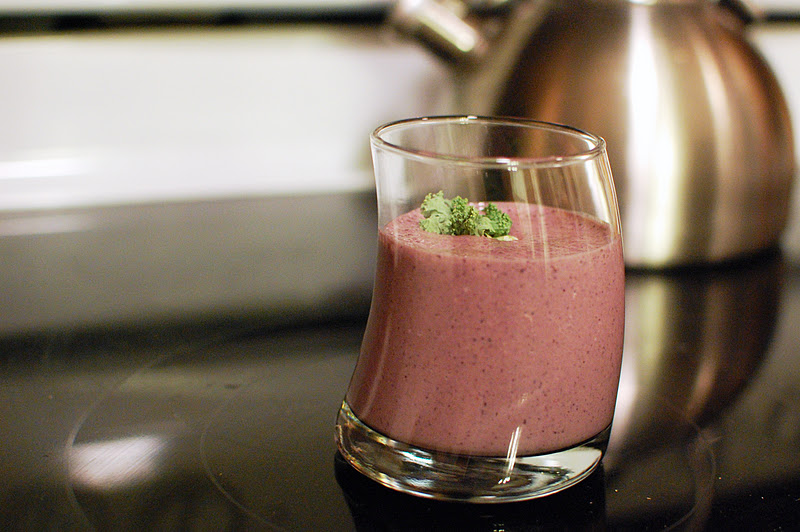
Violet Smoothie
Tonight's smoothie combination: fresh cranberries, fresh kale, frozen blueberries, and milk.
Try it now. Thank me later.
Thursday, January 12, 2012
Kale, Clementine, and Almond Salad
There's no magic to this recipe: Just put chopped kale, clementine sections, and raw almonds in a bowl. No dressing needed!
Simple veggies, fruit, and nut salads are such easy, healthy go-to snacks or sides for me when I'm trying to lose weight.
Kale and Blueberry Smoothie
I've gotten so deeply into this seasonal eating adventure that I have to remind myself sometimes that it's still okay to eat out-of-season produce as long as it's been frozen or dried.
Hence this kale and blueberry smoothie. [It's been unseasonably warm this winter, so it's not THAT weird that I've been in the mood for smoothies!] This smoothie combines fresh, seasonal produce (kale) with frozen, out-of-season produce (blueberries) for the best of both worlds.
I put about a cup of frozen blueberries, a cup of fresh kale, a cup of fat-free Greek yogurt, and about 1/2 cup of milk into a blender and spun it up. It tasted fresh and healthy! Both my toddler and my infant enjoyed it!
Hence this kale and blueberry smoothie. [It's been unseasonably warm this winter, so it's not THAT weird that I've been in the mood for smoothies!] This smoothie combines fresh, seasonal produce (kale) with frozen, out-of-season produce (blueberries) for the best of both worlds.
I put about a cup of frozen blueberries, a cup of fresh kale, a cup of fat-free Greek yogurt, and about 1/2 cup of milk into a blender and spun it up. It tasted fresh and healthy! Both my toddler and my infant enjoyed it!
Friday, January 6, 2012
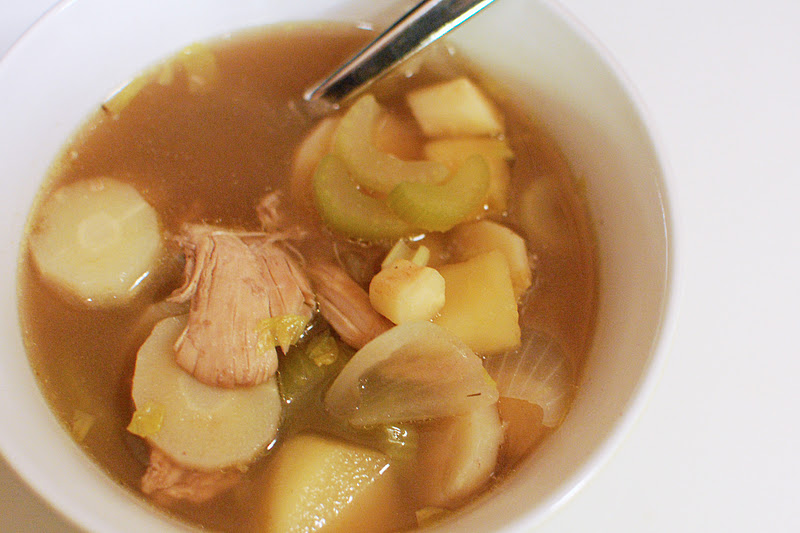
Indian-Spiced, Parsnip, Apple, and Chicken Soup
I made this soup entirely from scratch. Yup, I made the stock, too!
After reading Joel Salatin's "Folks, This Ain't Normal," I was inspired to cook with a whole chicken.
A few nights ago, my husband roasted a bird, stuffed with an apple, covered in olive oil and rosemary (in a 400 degree oven for about an hour). We had the chicken for dinner with vegetable side dishes, including Winter Fruit and Cabbage Side Salad. That night, I picked through the leftovers, separating the meat from the bones, skin, and sinew. I put the meat in one bag and the bones, etc. (including the apple!) in another.
Tonight I made the chicken stock. I put the remains of the chicken (including the apple, but not the meat) in a stock pot along with carrots, celery, onion, garlic, kale, Brussels sprouts, and parsley.
[It was pretty much a sampling of all the fresh veggies I had in my 'fridge that I had no other immediate plans to use. You could use whatever veggies and herbs you have on hand.] Then I covered the ingredients with water and brought them to a boil. From there, I turned it down to a simmer and allowed it to cook for three hours.
During that three hours, I became ADDICTED to the smell wafting from the pot. I actually had to tell myself, "just clear out the dishes in the dishwasher and then you can go take another whiff." Which turned into, "okay, a whiff after I finish the top rack...".
When the three hours were up, I removed the big "stuff" with a spoon, and then strained the remainder over a bowl. I wasn't picky about the very small bits of chicken and veggies that remained; if you are, you could strain through a cheesecloth. It seems like such a waste to throw out the veggies used to make a stock, but it's really not. They've given up their flavor to the stock and would only add unpleasant texture if you kept them. Think of them like tea leaves. :-)
I tasted the stock and it was amazing with a sprinkle of salt and pepper! I couldn't wait to make it into a tasty soup.
I put the stock back into the stock pot, and added 5 chopped parsnips, 2 peeled and chopped apples, 1 chopped onion, and a 1/2 bunch of chopped celery.
I also added the leftover chicken meat. Then I put about a teaspoon of garam masala in a tea ball and dropped it in. The tea ball was pretty much superfluous, because the spice got out anyway!
I allowed it to cook for half an hour, until the vegetables were tender.
I served the soup with very light sprinkles of salt, pepper, and more garam masala. It does need just a touch of salt to make it taste "like a soup."
The result was a fragrant, spicy / sweet soup that was unexpectedly delicious (I had high hopes for this soup, but not this high!). If you have not had parsnips in soup before, you absolutely must try this recipe. The parsnips are so sweet! Sweeter than the apples! Who needs sugar?!
And my experiment with the whole chicken was a definite success. The soup made enough food to feed an army, so for a $13 (organic, free-range) chicken, I got countless meals. That never happens with a package of boneless, skinless breasts!
After reading Joel Salatin's "Folks, This Ain't Normal," I was inspired to cook with a whole chicken.
A few nights ago, my husband roasted a bird, stuffed with an apple, covered in olive oil and rosemary (in a 400 degree oven for about an hour). We had the chicken for dinner with vegetable side dishes, including Winter Fruit and Cabbage Side Salad. That night, I picked through the leftovers, separating the meat from the bones, skin, and sinew. I put the meat in one bag and the bones, etc. (including the apple!) in another.
Tonight I made the chicken stock. I put the remains of the chicken (including the apple, but not the meat) in a stock pot along with carrots, celery, onion, garlic, kale, Brussels sprouts, and parsley.
[It was pretty much a sampling of all the fresh veggies I had in my 'fridge that I had no other immediate plans to use. You could use whatever veggies and herbs you have on hand.] Then I covered the ingredients with water and brought them to a boil. From there, I turned it down to a simmer and allowed it to cook for three hours.
During that three hours, I became ADDICTED to the smell wafting from the pot. I actually had to tell myself, "just clear out the dishes in the dishwasher and then you can go take another whiff." Which turned into, "okay, a whiff after I finish the top rack...".
When the three hours were up, I removed the big "stuff" with a spoon, and then strained the remainder over a bowl. I wasn't picky about the very small bits of chicken and veggies that remained; if you are, you could strain through a cheesecloth. It seems like such a waste to throw out the veggies used to make a stock, but it's really not. They've given up their flavor to the stock and would only add unpleasant texture if you kept them. Think of them like tea leaves. :-)
I tasted the stock and it was amazing with a sprinkle of salt and pepper! I couldn't wait to make it into a tasty soup.
I put the stock back into the stock pot, and added 5 chopped parsnips, 2 peeled and chopped apples, 1 chopped onion, and a 1/2 bunch of chopped celery.
I also added the leftover chicken meat. Then I put about a teaspoon of garam masala in a tea ball and dropped it in. The tea ball was pretty much superfluous, because the spice got out anyway!
I allowed it to cook for half an hour, until the vegetables were tender.
I served the soup with very light sprinkles of salt, pepper, and more garam masala. It does need just a touch of salt to make it taste "like a soup."
The result was a fragrant, spicy / sweet soup that was unexpectedly delicious (I had high hopes for this soup, but not this high!). If you have not had parsnips in soup before, you absolutely must try this recipe. The parsnips are so sweet! Sweeter than the apples! Who needs sugar?!
And my experiment with the whole chicken was a definite success. The soup made enough food to feed an army, so for a $13 (organic, free-range) chicken, I got countless meals. That never happens with a package of boneless, skinless breasts!
Thursday, January 5, 2012
Beef and Winter Veggie Stir Fry
I love to make stir-fry, but it’s not a dish that I usually associate with winter vegetables. I’m more inclined to reach for peas and bell peppers than for kale, cabbage, and Brussels sprouts. But it turns out that fresh, winter veggies make a delicious and authentic stir-fry!
Sauce ingredients:
1/3 cup orange juice
1/3 cup Tamari (or low-sodium soy sauce)
1 tablespoon red wine vinegar
1 tablespoon sesame oil
1 tablespoon honey
1 tablespoon sesame seeds
1 tablespoon cornstarch
Stir-fry ingredients:
1 pound shaved beef (pastured and grass fed!)
1 nub of fresh ginger (about the size of a thumb), peeled and sliced
2 cloves of garlic, peeled and sliced
1 onion, peeled and sliced
1 cup kale, sliced into ribbons
2 cups cabbage, sliced into ribbons
4 Brussels sprouts, sliced into ribbons
1 cup baby carrots
1/2 cup raw cashews
Whisk together all of the sauce ingredients.
Put the beef, ginger, garlic, and onion into a wok. Put two tablespoons of the sauce in the wok and cook, stirring occasionally, until beef is just about done.
Add the kale, cabbage, Brussels sprouts, carrots, cashews and the rest of the sauce to the wok. Stir together and cook for 2-3 minutes or until veggies are warm, but still crisp, and the beef is done.
Viola. A beef stir fry that keeps veggies at the center, and tastes delicious without tons of sugar, oil, or salt.
I eat this just as it is, but it can also be served over a mix of scrambled eggs and rice.
Scramble two egg whites and one whole egg (I like at least one yolk in there so that the scrambled eggs look a little yellow) in the wok or in a separate pan. Add the scrambled eggs to two cups of cooked brown rice and mix together. This makes a kind of a “fried rice” that cuts down on the carbs (even if you eat the rice) by including protein-packed egg whites in the mix.
I should note that my husband tolerates kale and cabbage, but despises Brussels sprouts. I slipped them into this stir-fry and he cleaned his plate without so much as a question about the ingredients. Score one for me in “putting food in his food”!
Sauce ingredients:
1/3 cup orange juice
1/3 cup Tamari (or low-sodium soy sauce)
1 tablespoon red wine vinegar
1 tablespoon sesame oil
1 tablespoon honey
1 tablespoon sesame seeds
1 tablespoon cornstarch
Stir-fry ingredients:
1 pound shaved beef (pastured and grass fed!)
1 nub of fresh ginger (about the size of a thumb), peeled and sliced
2 cloves of garlic, peeled and sliced
1 onion, peeled and sliced
1 cup kale, sliced into ribbons
2 cups cabbage, sliced into ribbons
4 Brussels sprouts, sliced into ribbons
1 cup baby carrots
1/2 cup raw cashews
Whisk together all of the sauce ingredients.
Put the beef, ginger, garlic, and onion into a wok. Put two tablespoons of the sauce in the wok and cook, stirring occasionally, until beef is just about done.
Add the kale, cabbage, Brussels sprouts, carrots, cashews and the rest of the sauce to the wok. Stir together and cook for 2-3 minutes or until veggies are warm, but still crisp, and the beef is done.
Viola. A beef stir fry that keeps veggies at the center, and tastes delicious without tons of sugar, oil, or salt.
I eat this just as it is, but it can also be served over a mix of scrambled eggs and rice.
Scramble two egg whites and one whole egg (I like at least one yolk in there so that the scrambled eggs look a little yellow) in the wok or in a separate pan. Add the scrambled eggs to two cups of cooked brown rice and mix together. This makes a kind of a “fried rice” that cuts down on the carbs (even if you eat the rice) by including protein-packed egg whites in the mix.
I should note that my husband tolerates kale and cabbage, but despises Brussels sprouts. I slipped them into this stir-fry and he cleaned his plate without so much as a question about the ingredients. Score one for me in “putting food in his food”!
Winter Fruit and Cabbage Side Salad
I haven't been big on salad lately, but I need to get back into it if I expect to keep my diet low-carb.
I like salads because they are simple and fresh. All it takes to make a salad is the energy to cut up some veggies and throw them in a bowl. No complicated preparation; no long cooking times. Even in winter, it's possible to have a fresh, simple salad.
1 cup of kale, chopped
1/2 cup of green cabbage, chopped
2 dried figs, diced
1 small apple, cored and cut
Throw them in a bowl!
I found that this nutrient-dense salad didn't require any dressing. As long as I have something sufficiently sweet, or different in texture from lettuce, I often find that my salads are just fine without any dressing at all.
With my low-carb diet, I'm limited to one serving of fruit per day. This was a great way to use that one fruit! The apple was small, as were the figs, so I counted the two together as one serving of fruit.
Incidentally, I found the figs at Trader Joe's and they are decidedly not local (imported from Turkey). I do eat non-local produce, but I try to limit it to food that a) does not grow near my house in any season and b) is dry or dried so that I'm not incurring environmental costs just to move water from one place to another.
That said, I'm a huge hypocrite because I drink bottled water. Bottled water is the epitome of moving water from one place to another, not to mention a huge use of plastic, and I know that.
I have a hyper-local source of water (a well in my front yard), but the truth is that the water from it is disgusting. We invested more than $4,000 in a filtration system and the water is still slightly discolored and sulfuric/metallic tasting (though it no longer ruins loads of white laundry with rust stains or stinks up the house when a faucet runs). We do use our well water for washing food, cooking food, and making beverages like coffee and tea (because the water is perfectly potable), but it just doesn't taste good enough to drink it straight. Ever since I started this local eating adventure, I've been wracking my brain trying to figure out a way to solve my local water problem. And I haven't yet.
So, in the meantime, I'm eating dried figs, happy that I haven't imported from Turkey a product that is mostly water, even as I wash them down with a tall bottle of non-local water. We can only do our best.
And, back to the salad, I think I'll be coming up with more winter greens plus dried-fruit combos!
I like salads because they are simple and fresh. All it takes to make a salad is the energy to cut up some veggies and throw them in a bowl. No complicated preparation; no long cooking times. Even in winter, it's possible to have a fresh, simple salad.
1 cup of kale, chopped
1/2 cup of green cabbage, chopped
2 dried figs, diced
1 small apple, cored and cut
Throw them in a bowl!
I found that this nutrient-dense salad didn't require any dressing. As long as I have something sufficiently sweet, or different in texture from lettuce, I often find that my salads are just fine without any dressing at all.
With my low-carb diet, I'm limited to one serving of fruit per day. This was a great way to use that one fruit! The apple was small, as were the figs, so I counted the two together as one serving of fruit.
Incidentally, I found the figs at Trader Joe's and they are decidedly not local (imported from Turkey). I do eat non-local produce, but I try to limit it to food that a) does not grow near my house in any season and b) is dry or dried so that I'm not incurring environmental costs just to move water from one place to another.
That said, I'm a huge hypocrite because I drink bottled water. Bottled water is the epitome of moving water from one place to another, not to mention a huge use of plastic, and I know that.
I have a hyper-local source of water (a well in my front yard), but the truth is that the water from it is disgusting. We invested more than $4,000 in a filtration system and the water is still slightly discolored and sulfuric/metallic tasting (though it no longer ruins loads of white laundry with rust stains or stinks up the house when a faucet runs). We do use our well water for washing food, cooking food, and making beverages like coffee and tea (because the water is perfectly potable), but it just doesn't taste good enough to drink it straight. Ever since I started this local eating adventure, I've been wracking my brain trying to figure out a way to solve my local water problem. And I haven't yet.
So, in the meantime, I'm eating dried figs, happy that I haven't imported from Turkey a product that is mostly water, even as I wash them down with a tall bottle of non-local water. We can only do our best.
And, back to the salad, I think I'll be coming up with more winter greens plus dried-fruit combos!
Monday, January 2, 2012
Pasta with Kale and Cashew Cream Sauce
If it sounds to good to be true...
...It's probably just really delicious whole food.
I threw together this whole-wheat pasta and kale with garlicky cashew cream sauce as a quick lunch this afternoon.
I set the cashews in water to soak just before my workout (which lasted 90 minutes).
When my workout was over, the cashews were ready to go and I was able to put a gourmet lunch on the table in the time it took to boil and cook a pot of pasta. Bonus for it being a pasta dish with plenty of protein, healthy fat, and dark leafy greens!
1 pound whole-wheat pasta
2 cups whole, raw cashews, soaked in water for at least an hour
1 teaspoon of olive oil
4 cloves of garlic, crushed
1 large bunch of kale, chopped
Put on a pot of water to boil for the pasta. Add pasta and cook. About five minutes before the pasta is finished cooking, add the chopped kale to the water. Drain pasta and kale together and put into a large bowl.
While the pasta is cooking, heat olive oil and garlic in a skillet over medium heat.
Place the soaked cashews in a blender with enough water to make them smooth when blended. It's best to start with a little water and add as you go so that the cashew cream does not become too watery. After about a minute in the blender, it comes out looking like this.
Add the cashew cream to the skillet with the garlic and olive oil. Mix and allow to warm through.
Add sauce to the drained pasta and kale and then mix well.
Serve with a light sprinkle of salt (it really does need it) and some cracked black pepper.
This made an INCREDIBLE lunch. Restaurant quality. I would never have known this was vegan unless you told me.
My carnivorous and highly-skeptical husband even enjoyed this. He went back for seconds, and then asked if I could please (please, PLEASE) make all "cream" sauces from this recipe in the future, foregoing all attempts based on skim milk, yogurt, and cottage cheese.
Now THAT'S a stellar endorsement.
I thought cashew cream sauce would be too good to be true -- Now I know it's just too good not make again!
...It's probably just really delicious whole food.
I threw together this whole-wheat pasta and kale with garlicky cashew cream sauce as a quick lunch this afternoon.
I set the cashews in water to soak just before my workout (which lasted 90 minutes).
When my workout was over, the cashews were ready to go and I was able to put a gourmet lunch on the table in the time it took to boil and cook a pot of pasta. Bonus for it being a pasta dish with plenty of protein, healthy fat, and dark leafy greens!
1 pound whole-wheat pasta
2 cups whole, raw cashews, soaked in water for at least an hour
1 teaspoon of olive oil
4 cloves of garlic, crushed
1 large bunch of kale, chopped
Put on a pot of water to boil for the pasta. Add pasta and cook. About five minutes before the pasta is finished cooking, add the chopped kale to the water. Drain pasta and kale together and put into a large bowl.
While the pasta is cooking, heat olive oil and garlic in a skillet over medium heat.
Place the soaked cashews in a blender with enough water to make them smooth when blended. It's best to start with a little water and add as you go so that the cashew cream does not become too watery. After about a minute in the blender, it comes out looking like this.
Add the cashew cream to the skillet with the garlic and olive oil. Mix and allow to warm through.
Add sauce to the drained pasta and kale and then mix well.
Serve with a light sprinkle of salt (it really does need it) and some cracked black pepper.
This made an INCREDIBLE lunch. Restaurant quality. I would never have known this was vegan unless you told me.
My carnivorous and highly-skeptical husband even enjoyed this. He went back for seconds, and then asked if I could please (please, PLEASE) make all "cream" sauces from this recipe in the future, foregoing all attempts based on skim milk, yogurt, and cottage cheese.
Now THAT'S a stellar endorsement.
I thought cashew cream sauce would be too good to be true -- Now I know it's just too good not make again!
Subscribe to:
Posts (Atom)