Wednesday, December 14, 2011

Interview with "Everyday Happy Herbivore" Cookbook Author, Lindsay S. Nixon

Today it’s my pleasure to interview Lindsay S. Nixon of Happy Herbivore. 

Lindsay is vegan cookbook author who makes easy work of healthy cooking with plant-based, whole foods.  She’s exactly the kind of tutor that a newbie cook like CSA Virgin needs! 

Lindsay has great advice on sticking to the basics and enjoying local produce, which she shared with me in our conversation, below.  I already feel more confident in my vegan cooking abilities and look forward to putting them to good use!

Lindsay, what’s your least favorite vegetable?  What would you make if you were forced to cook with it anyway?  I ask because I recently signed up for a CSA, and I’m worried about what I’ll do with the vegetables I like the least.

I don't like Brussels sprouts or eggplant. For the Brussels sprouts, I'd probably just make a stock with them.  And the eggplant?  Give it to my husband.  He likes eggplant.

I love the idea of making a stock!  I’m learning that can also be a great way to use an assortment of leftover veggies kicking around in the bottom of the ‘fridge drawer before they go bad.  You’re lucky; my husband is pickier about vegetables than I am -- I doubt he would take my eggplants!

Until recently, I thought that the universe of the vegetables I like and don’t like was well known to me.  But then I started this local-eating adventure and discovered a whole world of plant foods that I’d never tried before (kohlrabi, sunchoke, etc.).  Are there vegetables or fruits out there that you haven’t tried yet, but would like to?  What’s your strategy for learning to cook with a new plant food?

I'm not really a fan of exotic ingredients; I tend to stick with the basics when cooking and writing recipes, but when I travel I do try different fruits, vegetables, legumes, grains.  Except for French mustard (we all have weaknesses) I won't buy food that's been flown in from Europe, Asia or even far away within the United States, so I make a point to try and enjoy foods I can't get at home when traveling.  I've never heard of kohlrabi or sunchoke!

I love to try different foods when travelling!  I’ve had amazing, fresh mango juice in Haiti, delicious dishes made with cassava in West Africa, and fermented cabbage (kimchi) in Korea.  Each of these foods was amazing in its local context, but I haven’t enjoyed them as much when I’ve had them at home.  I think you’re on to something.     

With your focus on basics, it’s obvious why you’re a great meal planner and grocery-list maker.  Do you sometimes shop at farmers’ markets?  How do you incorporate unusual and unexpected ingredients you might find there (“I just have to have those blue potatoes!”) into an otherwise regimented weekly meal plan?

I just spent the last year living abroad where I didn't have access to a Farmer's Market. The town I live in now might have one in the summer, but they don't now in winter.  I do buy local when I can, but all the "local" foods at the grocery store are familiar and common ingredients like lettuce or carrots.  I generally avoid buying unusual or exotic ingredients.  I want my recipes to be accessible to everyone, no matter where they live, so exotic or uncommon ingredients are out.

Lindsay, you are so much more disciplined than I am!  I cannot back away from the blue potatoes!  Maybe that’s part of the reason why I’m often stressed out.  You used to be a lawyer, so you understand what it’s like to work long hours in a stressful job.  Any tips for cooking from scratch with whole plants, but not spending a ton of time chopping?  What tasks have gotten easier for you as you’ve become more expert in vegetarian cooking?

The more you chop, the faster and better you will get at it.  I chop an onion in seconds now -- such a change from when I first started out.  It just takes practice.  You can also buy pre-chopped or even get an electric chopper or use a food processor/blender -- all those are good time-saving options.

It’s reassuring to know that it will come with time.  For the moment, my fingers are still in more danger of being cut than the onion!  Another problem that I have as a novice cook is figuring out how to incorporate seasonal produce.  Even more so than a happy omnivore, a happy herbivore must be attuned to the seasonality of her food (beef and pork are available year-round, but good, fresh asparagus is only available in the spring).  Now that it’s winter, how do you cope?  Lots of winter squash?  Lots of canned tomatoes?

I'm not really a seasonal eater.  I mean, yes, I do try to buy local and what's in season, because I find foods grown out of their season don't taste as good [Watermelon in March? Yuck!] but I have no objection to organic frozen vegetables and fruits.  This time of year we eat a lot of greens (many thrive in the cooler months), squash, sweet potatoes, potatoes, apples -- there are a good bit of foods growing this time of year.

You’re so right about the organic frozen produce.  As Barbara Kingsolver said in Animal, Vegetable, Miracle, “Eating locally in winter is easy.  But the time to think about that would be August.”  I don’t have a good stash of frozen veggies and fruits this year, so I’m trying to make do mostly with what’s still growing.  You’re right that there’s a lot out there, but it’s still difficult.  Your recipes do make it easier, though!

Thanks for all you do to make cooking with plants easy, accessible, and fun.  Could you share a favorite winter recipe from your new cookbook?

This soup is Dal-icious! It’s so flavorful you’ll want seconds.  And thirds!

Sweet Potato Dal | serves 2

1 small sweet potato, skinned
1 small onion, finely chopped
3 garlic cloves, minced
red pepper flakes
1/4 tsp turmeric
1/4 tsp garam masala, plus extra
1 cup vegetable broth, plus extra
1/2 cup red lentils
4 cups spinach, or more
salt

Dice sweet potato into small ½-inch cubes, and set aside.

Line a medium pot with a thin layer of water and saute onions and garlic for a minute.

Add a pinch or two red pepper flakes and continue to cook until all the water has cooked off.

Add turmeric, ¼ tsp garam masala and stir to coat.

Add 1 cup broth, uncooked lentils, and bring to a boil.

Once boiling reduce to low, cover, and simmer for a few minutes, about 5.

Add sweet potatoes, bring to a boil again and reduce to low and simmer, until lentils are fully cooked (they expand and the sauce thickens), about 5 minutes more.

Check periodically to see if you need additional broth (I tend to add an extra ½ cup but it can vary).

Once lentils are cooked and sweet potatoes are fork tender, taste, adding more garam masala as desired (I like to add another ¼ tsp but some blends are stronger than others).

Add spinach, continuing to stir until spinach cooks down and softens. Add salt to taste and serve.


Per Serving:
232 Calories
0.9g Fat
42.2g Carbohydrates
17.7g Fiber
4.7g Sugar
15.4g Protein

Thanks so much for stopping by the CSA Virgin blog, Lindsay!  I wish you all the best and look forward to trying all your fantastic, plant-based recipes! 

Lindsay S. Nixon is a rising star in the culinary world, praised for her ability to use everyday ingredients to create healthy, low fat recipes that taste just as delicious as they are nutritious. Lindsay's recipes have been featured in Vegetarian Times, Women's Health Magazine and on The Huffington Post.  Lindsay is also a consulting chef at La Samanna, a luxury resort and four-star restaurant in the French West Indies.

Lindsay’s new cookbook, “Everyday Happy Herbivore,” includes more than 175 quick and easy recipes that feature wholesome, easy-to-find, fresh ingredients and no added fats.

Tuesday, December 13, 2011

Hungarian Cabbage and Noodles

I've been spending a lot of time adulterating my mom's excellent recipes lately, so I decided to try one straight up tonight.

My grandmother, my mom, and my aunts all love this dish.  I remember hating it as a kid.  I think it's a taste you only acquire as you grow up.

The ingredients couldn't be simpler:

Egg noodles (see below)
Head of cabbage, sliced
1/4 stick of butter
Heaping tablespoon of paprika
Salt and pepper to taste

Normally, I try not to cook with butter.  But, like I said, I decided to stick with the original recipe tonight.  A quarter stick of butter goes over at least eight servings of cabbage and noodles, so it seemed like a small splurge.

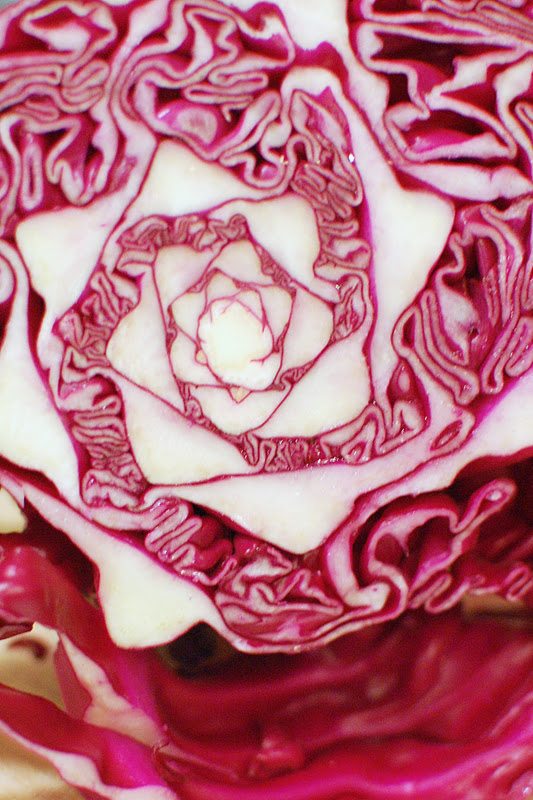
The local cabbage (which was gorgeous -- like a fractal!) I sliced into strips and then steamed in a pot with about 1-2 inches of water in it.


When the cabbage was soft, I drained it, and put it in a large bowl.  I stirred in the butter, allowing it to melt, and added the paprika.


While the cabbage was steaming, I made my own egg-white noodles.  They came together in the time it took to boil the water for them.  I used:

2 cups whole-wheat pastry flour
8 egg whites
3/4 teaspoon baking powder

I kneaded the ingredients into dough and then ran through the pasta roller.  Simple, simple, simple.  [Why does anyone use boxed pasta?]


Fresh pasta takes only a few minutes to cook.

When the pasta was done, I drained it and then stirred it together with the cabbage.  I topped it with a small amount of salt, pepper, and some extra paprika.


It tasted just like I remembered from when I was a kid, but better!  I actually like it now!

"Stop putting food in my food!"

My husband lost it last night.

He’s tired of me sneaking food into his food.

When he came home from work, I told him there were mint-chocolate brownies on the counter. He looked skeptical.

“What’s in them?”

“Mint and cocoa.”

“No, what’s in them? What’s the weird stuff that doesn’t belong there?”

I recently put applesauce in his muffins and spinach in his meatloaf. He’s on to me.

“Nothing. I put food in them.”

He looked at the dishes in the sink; he saw the tell-tale bean flecks in the strainer. “It’s black beans, isn’t it?! Stop putting food in my food!”

Why is it that we will FREAK OUT if someone puts black beans in our brownies, but we’re perfectly okay with someone putting in partially-hydrogenated soybean oil, soy lecithin, maltodextrin, natural and artificial flavors, acacia and xanthan gums, and medium chain trigylcerides?

Those are just some of the ingredients in Duncan Hines brownie mix!

Who’s putting “weird stuff that doesn’t belong there” in the brownies?

Me?

Or Duncan Hines?

Monday, December 12, 2011

Fresh Mint Chocolate Brownies

I am in a baking mood.  This has never happened to me before.  But I'm going with it.

Last night, thoughts of mint-chocolate brownies danced in my head.  I'd never had a mint-chocolate brownie before.  But it had to be possible.  And it had to be good.

I couldn't think of a reason not to try it.

And I knew I could make it plant-based.


The mint part speaks for itself; mint is a plant!  I knew I could find local mint from Shenandoah Growers in Harrisonburg, Virginia at Whole Foods.


I long ago learned that it's possible to substitute a can of low-sodium black beans (drained and rinsed) for the egg and oil in a boxed brownie mix preparation.  So, I figured it would work if making brownies from scratch, too.


I had just picked up a jar of local honey from Mr. B's Apiaries (Odenton, Maryland) at the Anne Arundel County farmers' market, so I knew I could use that instead of refined sugar to sweeten the brownies.

Whole-wheat flour would, of course, stand in for white.

Let's see: Mint, black beans, honey, and whole-wheat flour.  Nothing bad there.

I ended up adapting a vegan recipe from Emily Webber.  [Because of the honey, my version is not strictly vegan.]

Ingredients:

1 (15 ounce) can low-sodium black beans, drained and rinsed
1/2 cup honey
3/4 cup water
2 teaspoons pure vanilla extract
1/2 teaspoon mint extract
1/4 cup chopped fresh mint
3/4 cup unsweetened cocoa powder
1 teaspoon baking soda
1/2 teaspoon salt
3/4 cup whole wheat pastry flour

Preheat oven to 350 degrees.

Drain and rinse the beans.

Add the beans, honey, water, vanilla extract, and mint extract to a blender. Blend until smooth.

In a separate bowl, combine chopped mint, cocoa powder, baking soda, salt, flour. Add wet ingredients and mix well.


Spray an 8x8 pan with cooking spray and fill with brownie batter.

[The awesome thing about not using eggs is that you can feel free to lick the spatula...]


Bake for 30 minutes or until a toothpick comes out clean.

You should be forewarned that these brownies are NOT SWEET.  Whatever small amount of sweetness they do have comes entirely from the mint.  The honey serves only to offset the natural bitterness of the cocoa, but does not actually add sweetness in its own right.

To my taste, these are great.  But I've been eating foods that are low in sugar for a long time.  If you're accustomed to really sweet brownies, these may not be for you.  On the other hand, if you often find that desserts are too sweet, these may be just the thing you need (er, want...).

Enjoy!

Sunday, December 11, 2011

The Whole Turnip

I really enjoy using as much of a plant as I can.

At the Anne Arundel County farmers' market yesterday morning, I bought four, gorgeous turnips, complete with nice, long greens from a farmer in my county.


I found two wonderful recipes for turnips; one from Dr. Oz and one from Novel Eats.  Together, they allowed me to use the entire turnip plant.

Turnip Mash 

4 turnips
1/2 cup fat-free Greek yogurt
cracked black pepper (to taste)

Put pot of water on to boil.

Cut the turnips into chunks.

Boil turnip chunks for 20 minutes or until soft.


Drain and then mash with yogurt.  Top with cracked black pepper.  Serve as a side dish.


Quinoa with Turnip Greens and Almonds

1 cup quinoa, sorted and rinsed (it is very important to rinse quinoa prior to cooking it otherwise it will taste bitter)
2 cups water
1 tablespoon olive oil
1 onion, chopped
1 bunch turnip greens, chopped
1/2 cup almonds, slivered or chopped

Rinse the quinoa well, then cook it according to package directions.

As the quinoa is cooking, saute the onion in the olive oil until it is translucent.

Add the chopped turnip greens and cook until they are wilted.


Once the quinoa is done, drain and rinse, then add to the onions and turnip greens.  Cook for a few minutes more.  Make sure you keep an eye on it because otherwise the quinoa will stick to the bottom of the pan and burn.

Serve with toasted almonds sprinkled on top.  This dish can be either a main dish or a side.


I served both of these dishes as sides to a meatloaf with roasted carrots.

It was a fabulous, healthy dinner with lots of local produce!

Saturday, December 10, 2011

Oatmeal Apple Raisin Cookies

My mom makes the most incredible oatmeal raisin cookies.

She makes them every Christmas.  I have very fond memories of my sister and I helping her to make them, and of eating them through April because I kept asking for batch after batch.

Once I grew up and moved out on my own, she gave me recipe.  I have since attempted to make them every year at Christmas.  Every year, my cookies come out like crap.  I don't know what the problem is, other than that they require "my mother's love" as one of the ingredients.

So, this year, I have officially given up, and decided to try a variation.  The originals wouldn't have worked, anyway.

My mom's original recipe calls for vegetable shortening, 1.5 cups of refined sugar, white flour, and egg yolk.  These are all ingredients I try to avoid anyway, so maybe it's just as well to let her make them.  I can enjoy them as a special treat when I visit her house!

My new version uses unsweetened apple sauce in place of the vegetable shortening, 1 cup of maple syrup in place of the refined sugar (I cut water from the original recipe to compensate for the additional liquid), whole-wheat flour in place of the white flour, and two egg whites instead of one whole egg.

The result is a cookie that is in absolutely no way reminiscent of my mother's oatmeal raisins.  It's an entirely different cookie: more cake-y between the oats with a unique sweetness.  But still yummy!


The one thing I didn't change: Letting my girls help me make them.

Ingredients:
3/4 cup applesauce
1 cup maple syrup (still a whopping amount, but less sugar than the original)
2 egg whites
1 teaspoon vanilla extract
3 cups uncooked oats (must not be "instant")
1 cup whole-wheat flour
1 teaspoon salt
1/2 teaspoon baking soda
1 cup raisins

Preparation:
Pre-heat oven to 350 degrees.
Combine apple sauce, maple syrup, egg whites, and vanilla extract.


In a separate bowl, combine dry ingredients (through baking soda).


Combine wet and dry ingredients.  Stir well.

Add raisins and stir.


Drop by rounded teaspoon (about 1-inch balls) onto an un-greased non-stick tray.


Bake at 350 for 12-15 minutes.


Enjoy!


Thursday, December 8, 2011

Home-Made Kale Pasta with Brussels Sprouts

Home-Made Kale pasta with Brussels Sprouts. This is pretty much as good as local, seasonal eating gets. I'm pretty proud of myself for this one!


I am currently in the middle of reading "Folks, This Ain't Normal" by Joel Salatin. He tells the story of a friend at the supermarket who was buying staples: flour, salt, sugar, etc. The lady behind him in the check-out line said, "You don't have anything in there to eat. How do you eat?"

The more I learn about cooking with fresh, seasonal produce, the more I realize that there are some things that seem to go into almost every recipe. Whole-wheat flour. Eggs. Milk. Honey. Spices.

These things, I'm realizing, are all staples. I need them to cook! [I know that this is basic knowledge for many people, but I'm just coming to it now.] Just a few months ago, I could have so easily been the woman in the check-out line behind Joel Salatin's friend. I was very used to frozen pizza, canned soup, etc. If I had a pantry full of flour and a fridge full of milk and eggs, I wouldn't have known what to do with them. I might have starved! But now I know that with just a few basic ingredients (staples!) you can make just about anything with the addition of fresh, seasonal ingredients.

Case in point: Home-made Kale Pasta with Brussels Sprouts.

I combined fresh, seasonal kale and Brussels sprouts with a handful of basic staples: whole-wheat flour, egg whites, cheese, olive oil, garlic, and red pepper flakes. And I came out with dinner.

Who knew cooking from scratch could be so basic and so EASY?!

[...Everyone but me...]

The recipe for the homemade pasta itself was inspired by a whole-wheat spinach pasta recipe I found at Food Doodles. I knew I wanted something green and whole-wheat, and her recipe hit the mark. I used three handfuls of kale (my hands are small) instead of two handfuls of spinach, omitted the salt, and used six egg whites instead of three, whole eggs.

The recipe for the sauce and Brussels sprouts topping was directly from this recipe. I omitted the salt and used four egg whites instead of two whole eggs.

So, my final recipes were as follows:

Home-made pasta:

3 handfuls of roughly chopped kale
6 egg whites
1 tbsp olive oil
2 cups whole wheat flour, plus extra

In a blender or food processor blend the eggs, oil, and kale till very smooth.

Transfer the egg mixture into a bowl with the flour. Mix well then knead with floured hands adding at least 1/2 C extra flour.


Wrap in plastic wrap and let sit for 30 minutes before rolling.

[Good opportunity to cut Brussels sprouts and otherwise assemble ingredients for the sauce.]

Roll and cut the pasta using a pasta maker.


Boil for just a few minutes until the pasta floats and is al dente.


Sauce and Brussels Sprouts:

1 Tbsp. olive oil
2 cloves garlic, minced
1/4 tsp. red chile flakes
8 oz. Brussels sprouts, trimmed, outer leaves removed, and thinly sliced
4 egg whites
1/2 cup grated Parmesan cheese

Put water on to boil for pasta.

Meanwhile, in a large frying pan over medium-high heat add olive oil, garlic, and red pepper flakes. When fragrant and sizzling, add Brussels sprouts. Cook, stirring occasionally, until Brussels sprouts are soft, about 3 minutes. Reduce heat to low and keep warm, stirring occasionally.


In a bowl, combine egg whites and cheese. Set aside.


When pasta is done cooking, drain and immediately add to egg and cheese mixture. Toss to coat pasta (and lightly cook eggs).


Add Brussels sprouts mixture and toss to combine thoroughly.


That's it! A meal from scratch, entirely from fresh ingredients and staples, in less than one hour.


The sauce comes out unexpectedly creamy (though upon re-heating leftovers, it loses this magical quality). It's like having a cream sauce without REALLY having a cream sauce.

And with all the egg whites, this dish not just a mountain of carbs topped with fat (like many pasta dishes). It's, instead, a mountain of healthy carbs bursting with protein and veggies.

I paired mine with a glass of Pinot Noir and it was hearty, green PERFECTION.

 I will never think of pasta the same way again!

Monday, December 5, 2011

Animal, Vegetable, Miracle

I just finished reading Animal, Vegetable, Miracle by Barbara Kingsolver over the weekend, and it’s hard to overstate how much this book has already changed the way I think about food.

***

It was more than ten years ago now, but I still remember it vividly. I was in college and backpacking through Europe with friends. We arrived in Germany first thing in the morning, bleary-eyed from too much plane and train travel, weary from too much sight-seeing. We started hiking through the center of Munich in the hopes of finding some bread to eat. Or, at least, a beer.

There was one stand at first. And then two. We turned another corner and there were more. Ten stands lined the street. The street gave way into a square, and there were dozens. Tables and tents and vans and trucks, all overflowing with white stalks and exuberant signs announcing the arrival of “SPARGLE!!!”

Eight in the morning after an ten-hour train ride is no time to get excited about albino asparagus.

It was mid-May in Europe, and asparagus was suddenly available after the long winter, a taste of springtime itself, fresh and local. The Spargle Festival was in full swing.

We were less than impressed.

“Why didn’t we come here for Octoberfest instead?!”

We snickered at the weirdness of the Germans and their penchant for white asparagus, and moved on.

What a shame.

***

Animal, Vegetable, Miracle explains in full detail the sheer joy one should have at the arrival of asparagus in the springtime.

It follows one family’s efforts to eat locally for one year. In doing so, it celebrates the seasonality of food and, indeed, of life itself. Ecclesiastes (or the Beatles, if you prefer) comes to mind.

“To everything there is a season, and a time to every purpose under heaven.” -Ecclesiastes 3:1

As it turns out, it was just the right time and season for me to read this book.

On Thanksgiving, I shared with my guests after the meal that each of the ingredients I used to make our side dishes was locally grown. This information was met with eye rolling. Just one more insufferable hippie / yuppie concern. Save the whales, or whatever it is this week. Must be nice to have the time and money to worry about such things.

They, admittedly, had me feeling a bit down, and a bit self-conscious, about this locavore endeavor.

But Animal, Vegetable, Miracle perked me right up by proving that fresh, local, seasonal produce is not the domain of hippies or yuppies. It is, and should be, the domain of normal people.

Flying in your asparagus from South America in November is for pretentious foodie twits. Eating a local butternut squash from a farm a few miles away is for the rest of us.

Insisting on fresh tomatoes and strawberries in the dead of winter is for the entitled and the spoiled. Waiting till spring for such treats is for the rest of us.

Paying $6 a pound for imported, off-season produce is for the rich. Buying what’s available locally and inexpensively is for the rest of us.

I wish I could share this information with my family. But I won’t. Because Animal, Vegetable, Miracle also makes the case that food choices are like politics and religion -- not for polite conversation. People’s beliefs and practices about food are deeply held and emotional. It’s not worth destroying relationships to prosthelytize about the inherent wisdom of the local cauliflower.

So I will not talk about it (except on this blog…). But I am changed.

***

I now walk into a supermarket produce department and see an absolute embarrassment of riches.

It’s December, and there are “fresh” strawberries, blueberries, and blackberries piled high. There is an entire section of shelves just for watermelons.

How pretentious. How entitled. How expensive.

It is not the time of year to eat these things. They don’t grow here, and the cost (environmental and otherwise) to get them here, for our out-of-season “enjoyment,” is enormous. I put “enjoyment” in quotes because these off-season fruits are not even likely to be tasty. I can’t even count the number of times in the last few years I’ve ignorantly purchased fresh berries out-of-season (not even realizing what the season for berries is…) and been dismayed to find that they tasted like air and molded too quickly. I had the thought many times: “These are not the berries I remember from when I was a kid…”. And, indeed, they are not.

Those berries will be back around this summer.

Just because I can buy berries now doesn’t mean I should. Or that I even want to.

***

I walked through the produce section of the Trader Joe’s in Annapolis this weekend. I made it past the berries, and the tropical bananas and citrus.

I actually shuddered when I saw it.

There it was. “Fresh” asparagus. In December. Jet-flown from Peru to my local store.

In the same produce section, there were no winter squash. Not one butternut. Not a single spaghetti squash. No delicata. All of the “in-season” foods -- the onions, carrots, and kale -- were from California.

We got to the register. The cashier asked: “Did you find everything you were looking for?”

My husband beat me to it: “Yup, thanks!”

Damn.

Next time.

Because of Animal, Vegetable, Miracle, next time I’ll be the insufferable hippie / yuppie that says, “No, actually I was hoping to find more local produce.”

Sunday, December 4, 2011

Spinach, Arugula, and Kale Pizza

Sometimes everyone has a night when cooking just isn't going to happen.  In our house, we actually have a lot of them.

That's why we keep a stash of organic pizzas from Trader Joe's in our freezer.  For frozen convenience food, the ingredients aren't bad, and the nutrition information doesn't suggest that the pizza will cause an immediate coronary.

That said, it's not the best meal, and I know it.

But having a frozen pizza for dinner doesn't mean that it's impossible to include fresh produce.  Before I put our pizza in the oven, I topped it with frozen spinach, fresh kale, and fresh arugula.  The kale actually crisped up just like kale chips, which added a really welcome dimension to the pizza.  My toddler enjoyed helping me to spread the greens out over the pie, and then gladly ate an entire slice of her creation.


Now, if only Trader Joe's would make a good frozen pizza with a whole-wheat crust...

Saturday, December 3, 2011

Metro Diner

I am continually impressed by the Metro Diner in Annapolis.

I have been there many times before, but every time I go, I find something new, interesting, and completely unexpected.  The food is organic and local.  It's a great environment for kids.  And the price is right.  Every restaurant should be as consistently excellent as Metro Diner.

Today, I had a burger made with local bison, topped with feta cheese, red onions, and rocket, and a side of sweet-potato french fries.

I felt like each component of my meal was selected and prepared with extreme care.  This wasn't the usual beef burger with imitation cheese, a mealy tomato, and a pale piece of iceburg lettuce.  This was a burger worth eating.  Worth savoring.  Bison?  Feta cheese?  Red onions?  Arugula?  This is gourmet stuff.  At a diner!  And the side wasn't an after-thought, either.  My fries were seasonal sweet-potatoes done to a perfect crispness and finished with just the right amount of salt.

I can't believe how little I paid for such an incredible meal.

More than anything, though, I was excited to learn that the bison was grass-fed and local, from Gunpowder Farms in Monkton, Maryland.

Bison is a more sustainable choice, as well as a more healthy one, than feedlot beef.  Bison meat actually has less fat and cholesterol than beef, pork, chicken, or salmon, while containing more iron and vitamin B-12.  What a great deal!

Metro Diner has been in regular rotation in our family's restaurant line up since it opened.  Now that we're focused on sustainable, local choices, it's likely to become even more of a favorite than it already is!

Thursday, December 1, 2011

"Figgy" Pudding

Now that it's December, I've started signing Christmas carols in the car with my kids.  Which inevitably got me to:

Oh, bring us some figgy pudding /

What on earth is figgy pudding?!

With my new-found interest in cooking from scratch, I had to find out.

The answer, says the wisdom of the interwebs, is basically a bread pudding with figs.  Which I figured I could handle.  Off I went in search of what I knew would not be local figs.

But it turned out that my nearest grocery store did not have even exotic, imported figs.  They had no figs at all, either fresh or dried.  So, I grabbed a bag of dried California dates (dates are kind of like figs, right?) and went on my way.

The recipe I loosely followed is from Whole Foods.

Cooking spray
Cup of egg whites
2 cups (1-percent) milk
1/2 cup maple syrup
1 tablespoon vanilla extract
1 tablespoon ground cinnamon
1 cup dried dates (or figs!), chopped
3/4 loaf whole grain Ezekiel bread, ripped into pieces

Preheat oven to 350°F.

Lightly grease a (7- x 11-inch) baking dish with cooking spray; set aside.

In a large bowl, whisk together eggs, milk, sugar, vanilla and cinnamon and then stir in fruit.

Add bread and toss to coat, pressing bread down gently to help it soak up the milk mixture.


Transfer contents of bowl to prepared dish, cover with foil and bake until just set and fragrant, about 45 minutes.

Uncover and bake until crisp on top, about 15 minutes more.

Sweet and wonderful!  Though my husband and I decided it might be best served with an extra drizzle of milk and vanilla extract (or a shot of rum...) on top just before serving.  That the pudding was a little dry was probably a result of the crunchy, flourless Ezekiel bread soaking up less of the cooking liquid than a normal bread would.

Beet and Beet-Green Borscht

My has husband been a total sport about eating my vegan lentil, spinach, and wild rice soup.  But I think he's craving meat.  And, to be honest, I am, too.

I recently lost about 40 pounds, thanks to tough workouts from P90X and strict adherence to a high-protein, low carb, low fat diet.  I ate A LOT of egg whites, chicken breast, and pork tenderloin.  A lot of broccoli and spinach.  But pretty much no potatoes or other starches, and virtually no bread, rice, or pasta.

I'm a little nervous that carb-heavy seasonal foods (potatoes, etc.) are going to make me fat.  But I'm trusting that the home-cooked bounty of the earth will not fail me.  And, in fairness, despite a marked uptick in my consumption of carbs, my weight has not changed an ounce in the many weeks I've now been working on the locavore thing.

Nevertheless, I'm feeling the need for some protein to go with my lovely veggies.  The last timeI had beets in the house, my husband requested borscht.  So, with the "no feedlot" stew beef I found in the 'fridge (hubby is good at keeping it stocked with some kind of meat, in the hopes I'll eventually cook it), I decided to try the traditional Russian soup.


The recipe I loosely followed is one I found at Simply Recipes.  I wasn't up for all the fancy meat-shank cooking in the original recipe, so I just browned the stew meat in a pot with the onions and then threw everything else (up to beet greens and stems) in with it to cook.  [The original recipe called for cabbage, which I had forgotten to buy.  But the beet greens and stems looked like good roughage, so I chopped them up and threw them in, too].


5 cups low-sodium vegetable broth
3 cups water
1 pound stew beef
1 large onion, peeled, chopped
8 large beets, peeled, chopped
4 carrots, peeled, chopped
4 small blue and red potatoes, peeled, cut into 1/2-inch cubes
2 cups beet greens and stems, chopped
3/4 cup chopped fresh dill
3 Tbsp red wine vinegar
1 cup fat-free Greek yogurt
Pepper to taste

Spoon into bowls and serve each with a splash of red wine vinegar, and scoop of yogurt, and fresh dill sprinkled over top.

It was delicious, filling, and so veggie and protein packed, I'm convinced it'll actually do good things for my figure!

Sweet Potato Chips

Such a treat:

Four sweet potatoes sliced thin with a mandolin.   Lightly coated with olive oil and baked in a 400 degree oven for about 15 minutes.  Sprinkled with the lightest touch of salt possible.

Heaven.  On.  Earth.

Wednesday, November 30, 2011

What's in Season?

Just when I was starting to get discouraged -- having started this local, seasonal vegetable kick as farmers' markets and farm stands were winding down for the year -- I came across this wonderful list of in-season produce in the Washington, DC area for every month of the year.

What's in-season in December?

Apples
Beets
Brussels sprouts
Cabbage
Carrots
Cauliflower
Celery
Garlic
Kale
Kohlrabi
Leeks
Mushrooms
Onions
Parsnips
Pears
Potatoes
Pumpkins
Radishes
Turnips
Salad Greens
Sunchokes
Sweet Potatoes
Winter Squash

I can live with that!

Monday, November 28, 2011

Roasted Cauliflower

Cauliflower is one of very few vegetables that are still "in season" in Maryland.  I was able to find some local (Maryland) cauliflower in Whole Foods recently.  I'm not a big fan of cauliflower generally, but I know I need to learn to like it, because it will certainly come in my CSA box next year.

I've been having a lot of success with roasting lately, so I broke the cauliflower into florets (I had truly no idea what cauliflower looked like in its original form until I did this) and then spread it on a pan, coated in olive oil and cracked black pepper to roast at 425 degrees for about 20 minutes.

The result was nicely browned, but still surprisingly creamy cauliflower.  With a light sprinkle of salt at the table, I could learn to like it yet!

Lentil, Spinach, and Wild Rice Soup

My mom and my grandma make a wonderful, thin lentil soup.  It is one of the unique tastes of my childhood.

Their original recipe, as told to me by my grandmother, is as follows:

1/2 cup green lentils (dry)
1/2 cup ditalini pasta (dry)
1 onion, chopped
1 tablespoon of chopped garlic
"some" olive oil (about 1/4 cup)
"some" water (enough to fill the pot, probably six or seven cups)

Throw everything in a pot, bring to a boil, and then simmer for about an hour.

Serve with either a) lots of salt or b) lots of white vinegar.

Either way, enjoy by dipping bread into the broth.

I dare not attempt to "improve" on such a simple, healthy, and delicious recipe, which is perfection in its original form. Instead, I add the following only as a variation on a theme:


1/2 cup green lentils (dry)
1/2 cup wild rice (dry)
1 onion, chopped
1 tablespoon of chopped garlic
2 cups frozen chopped spinach
"some" olive oil (about 1/4 cup)
"some" water (enough to fill the pot, probably six or seven cups)

Throw everything in a pot, bring to a boil, and then simmer for about an hour.


Serve with either a) lots of salt or b) lots of white vinegar.

Either way, enjoy by dipping bread into the broth.

Friday, November 25, 2011

Thanksgiving Menu

This year's Thanksgiving menu was made largely from scratch and largely from local ingredients.  The herb-spiked stuffing was admittedly a boxed stuffing mix from Trader Joe's, spiked with fresh sage and thyme.  The steamed corn was little more than frozen kernels heated in the microwave.  But the links to everything else are provided.  It was a healthy, whole-foods feast fit for a king!


Starters

Salad

Main

Sides
Herb-Spiked Cornbread Stuffing
Steamed Corn

Dessert

Traditional Additions
Cheeseball, courtesy of my Sister
Ham, Garlic Mashed Potatoes, and Mushrooms, courtesy of my In-Laws
Desserts, courtesy of my Parents and Uncle

Thanksgiving Cheeseball

The most fun food at our Thanksgiving table this year was my sister's amazing, home-made cheeseball.  With three kinds of cheese rolled in nuts and herbs, it's indulgent and delicious.  [I won't divulge her secret recipe!]

This year's addition of grape plumes might have been tasty with the cheese, but the world will never know.  My toddler ate every single grape off of the skewers before anyone else got a chance!

Related Posts Plugin for WordPress, Blogger...